
In the fast-paced world of plugin development, ensuring quality through effective testing is paramount. As developers focus on creating innovative functionalities, the strength of a plugin often lies in its reliability and performance. Testing plugins isn’t just an optional step; it’s a crucial best practice that can make or break user experience. In this article, we delve into best practices for testing plugins, exploring emerging trends and strategies that help developers enhance their products and maintain user trust.
Creating a robust testing environment is the first step in plugin development. Developers should set up a staging environment that mirrors the live system to ensure tests are even more relevant. This helps in identifying and fixing issues before they reach your end-users. As Michael O’Neill, a software testing consultant, says, "A well-maintained staging environment saves time and reduces the error rate in production." Investing time in setting up this environment pays off significantly, allowing for thorough testing and minimizing future headaches.

With the growing complexity of plugin functionalities, automation has become an indispensable tool in testing. Automated testing tools can execute repetitive tasks, ensuring that your plugin functions correctly across different scenarios without constant manual oversight. Tools like Selenium and PHPUnit allow for the execution of unit, integration, and functional tests, effectively covering a vast array of possibilities. According to Lillian Swanson, a software engineer, "Automation not only speeds up the testing process but also increases accuracy, eliminating the human error factor."nBy incorporating automation, developers can focus on more creative tasks while trusting that their tests will run smoothly.
Listening to users isn’t just beneficial post-launch; gathering feedback during the testing phase can significantly improve plugin quality. Conduct beta testing among a select group of users, allowing them to explore and report any issues they encounter. This approach not only enriches the testing process by providing diverse user experiences but also fosters community engagement. Accessing real user scenarios can help identify usability issues that developers may never consider. "Beta testing unlocks invaluable insights that can drive the final phases of development, ensuring a smoother public launch," suggests Amy Robinson, a product manager.

In a world filled with various platforms and environments, testing for performance and compatibility is vital. Developers must ensure that their plugins function seamlessly across all targeted platforms, including different browsers and operating systems. Performance testing helps assess how well the plugin handles traffic spikes, running loads or queries. Utilizing tools like Apache JMeter allows developers to simulate user traffic and gauge real-world performance metrics. As Steve Harrison, a performance analyst, remarks, "A plugin that lags or crashes under pressure is a one-way ticket to losing users. Prioritizing performance keeps your users happy and retained."
In the age of cyber threats, plugin developers need to prioritize security during the testing phase. Implementing security testing tools ensures that vulnerabilities are addressed early in the development process. Automated security scans can detect issues like SQL injection or cross-site scripting, which could compromise user data and trust in your plugin. Regular security audits should be part of your testing routine. As cybersecurity expert Arnold Schmidt advises, "Failing to secure your plugin can have catastrophic consequences. Prioritize security testing; it protects both your users and your reputation."
Documentation may not seem like a hands-on test practice, but it plays a crucial role in effective plugin testing. Maintaining detailed records of testing processes, bugs found, and resolutions applied helps ensure accountability and transparency within the development team. Good documentation serves as a resource for future updates, where developers can quickly refer back to earlier issues and solutions. As noted by Laura Cheng, a technical writer, "Well-kept documentation is the backbone of development practice. It eases onboarding processes and enhances collaboration among team members."
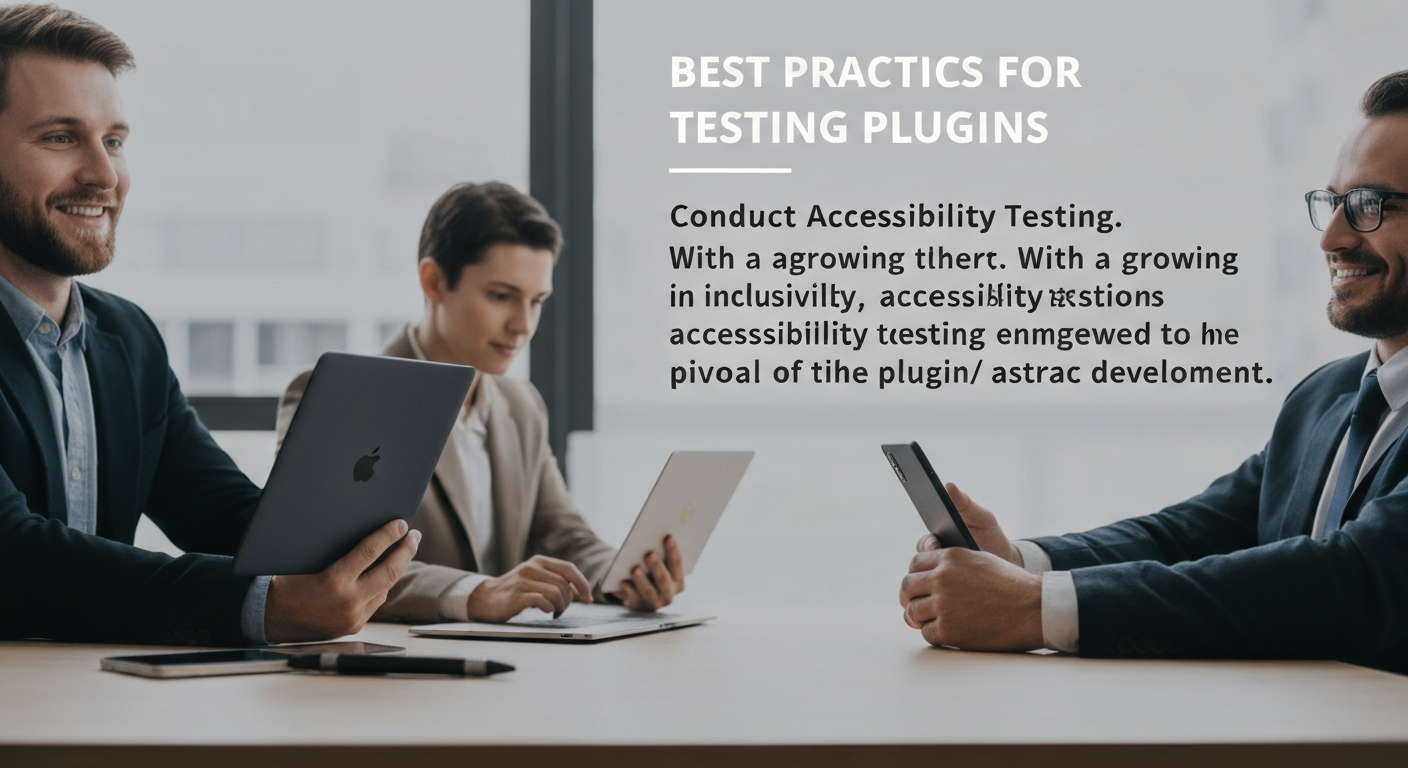
With a growing emphasis on inclusivity, accessibility testing has emerged as a pivotal aspect of plugin development. Ensuring that your plugins are usable by people with disabilities not only broadens your user base but also complies with various legal standards. Utilizing tools like Axe or Lighthouse can help identify potential accessibility issues. Ensuring your plugin is compatible with screen readers or considers color contrast can significantly impact user experience. "Accessibility is not just a checkbox; it’s about making sure all users can benefit from your plugin," says Patricia Collins, a user experience designer.
Effective testing strategies are not just about finding bugs; they are about ensuring the best possible user experience and fostering trust within your community. By committing to these best practices, developers can elevate their plugins and their reputation in the industry. Readers are encouraged to share their thoughts, experiences, and questions in the comments. Let’s continue the conversation on improving plugin development practices together!